
Throughout its 100-year history, Mills College Art Museum has supported artists through exhibitions, commissions of new work, and long-term residencies. Early residencies emphasized teaching classes as a central component, while in more recent years, artists in residence connected with students through studio visits, critiques, and artist talks and programs. MCAM’s very first artist residency was the Mills College “Summer Sessions,” a series of co-educational classes and workshops spanning a variety of disciplines open to students and the public that ran from 1933-1952, under the leadership of President Aurelia Henry Reinhardt. As part of the Summer Sessions art program, esteemed German art historian and MCAM Director Dr. Alfred Neumeyer invited an eclectic mix of renowned European, American, and Latin American artists to teach courses in their areas of expertise and exhibit work in the Mills College Art Museum.
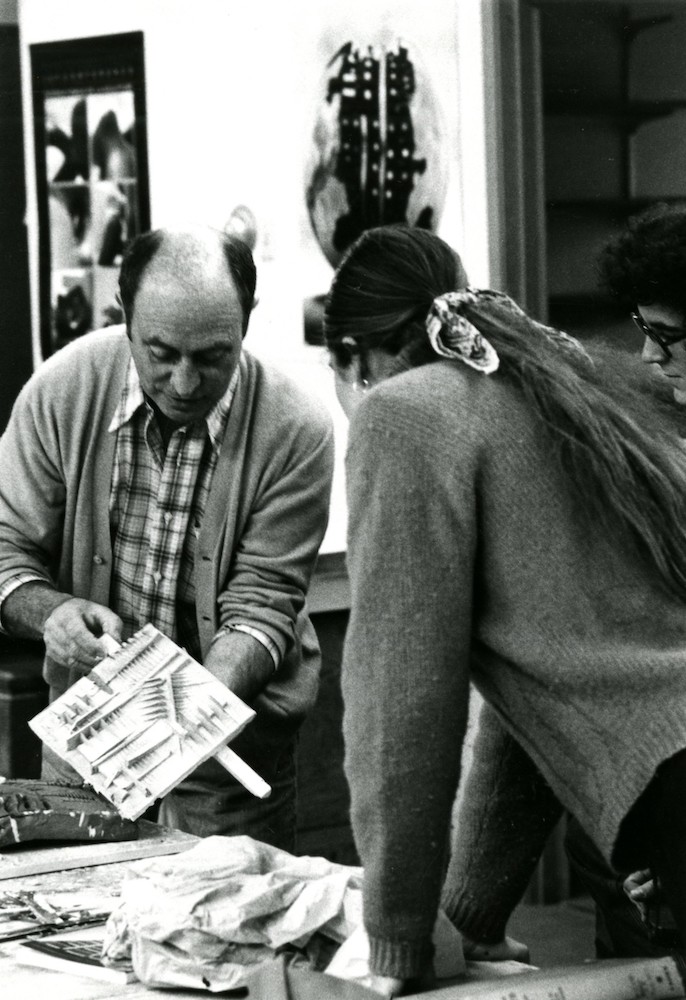
From 1979-1982, internationally renowned Italian sculptor Arnaldo Pomodoro (1926-2025) was in residence as the Mary Woods Bennet Distinguished Visiting Professor, teaching graduate and beginner courses in sculpture. Known for his geometric bronze works, Pomodoro’s sculptures often contain tears or stalagmite-like aberrations, and appear worm-eaten and corroded, giving the illusion of being caught in the process of gradually transforming into another object altogether.
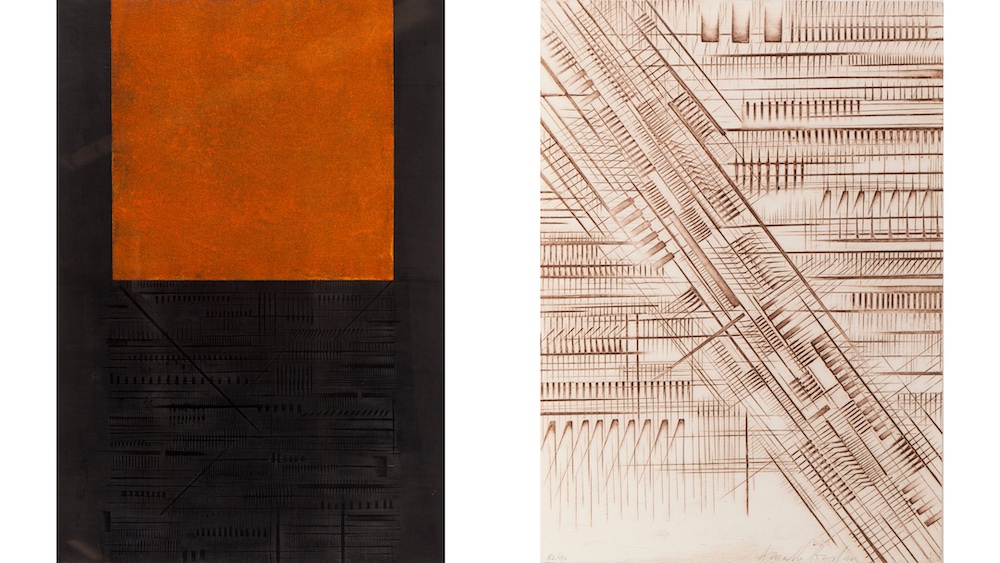
In 1979, Mills College Art Museum acquired seventeen lithographs by Pomodoro, which were subsequently exhibited in the gallery from February 23 through April 1, 1979. His work was also included in the exhibition Visiting Artists at Mills (March 17-April 5, 1981).
Years later, Pomodoro donated Disco (1986) to the college. This 4,000-pound bronze kinetic sculpture spins on its x-axis with the wind (or more often a push).
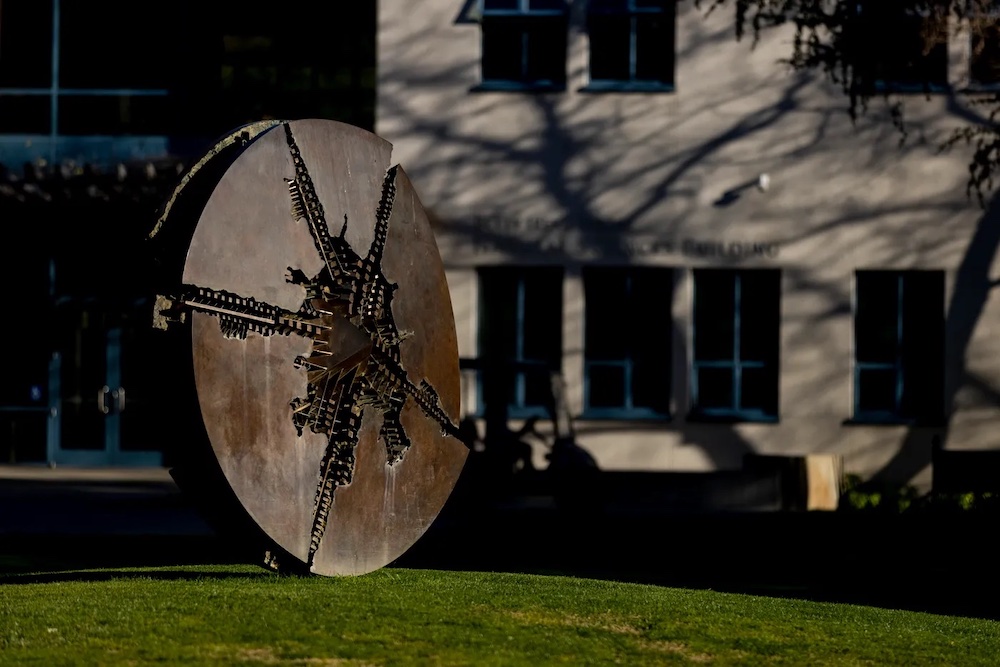
Disco is one of a series of giant disc-shaped sculptures created by Pomodoro that can be found in outdoor locations around the world, including the campus of the University of Chicago in Illinois; the Museum of Outdoor Arts in Greenwood Village, Colorado; the PepsiCo Headquarters in Purchase, New York; Charlotte, North Carolina; Darmstadt, Germany; and two in Milan, Italy.
Art+Process+Ideas Artist Residency, 2015–2023
The Art+Process+Ideas Artist Residency (A+P+I), which ran from 2015 through 2023, followed in the strong tradition of the Summer Sessions, bringing engaging and important artists to campus to create and exhibit new work and connect with students.
In response to changes faced by the Art Department, in particular, the loss and retirement of multiple arts faculty members, Mills College professors of art Catherine Wagner and Yulia Pinkusevich, along with MCAM Director Stephanie Hanor, conceived of the residency to address the need for graduate and undergraduate students to study with experienced, professional, and active artists. As a laboratory for creativity, the artist in residence program was intended to help reinvigorate the Art Department, act as a positive recruitment strategy for the MFA program, serve as a springboard for innovation across campus, and bring awareness to the arts programs at Mills and the Bay Area.
It’s a wonderful way to bring artists—artists working on really exciting things—to campus, have them engage with our students, have them engage with the larger community, and also get a glimpse of what these brilliant people are doing, what their process is like . . . It’s important to keep in mind that it’s not a piece of cake, but here are three people doing it successfully and on their own terms in their own way. I think it gives students not only a model but also empowers them to figure out their own path.
– Yulia Pinksukevich, Professor of Art 1
Instead of formal classes, students would learn from A+P+I artists through studio visits, critiques, and artist talks and programs. Artists in residence had to be representative of the Bay Area’s diversity and undertake practices that emphasized a research-based approach complimentary to an academic setting. In addition to the benefits A+P+I would provide the campus community, the program was also a critical initiative of community outreach. With the rapid increase in rents across the Bay Area that often push artists out, MCAM and the Art Department took an active role in providing essential space to Bay Area artists faced with the twin challenges of finding both artistic community and affordable studio workspaces.
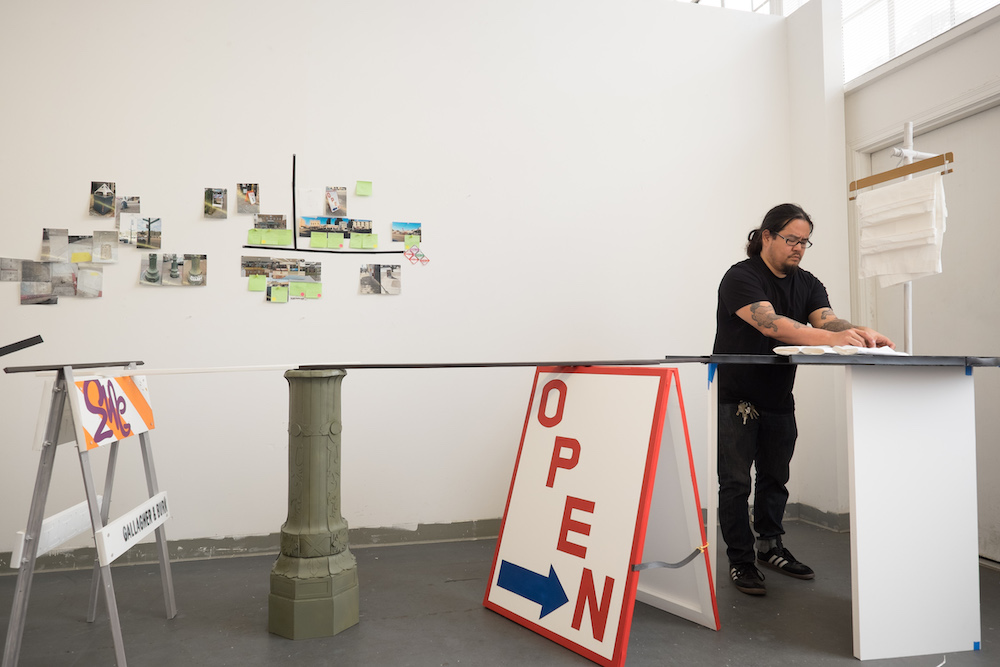
It’s such a wonderful opportunity to have studio space, to have a museum show at the end of it, to be in commune with other artists, because once you finish your schooling there are so few spaces with community, especially with artists that you don’t already necessarily know, so, it’s been great to just have a chance to be here with other folks and learn from one another.”
– Weston Teruya 2
A+P+I 2015: Zarouhie Abdalian, Jacqueline Kiyomi Gork, Weston Teruya
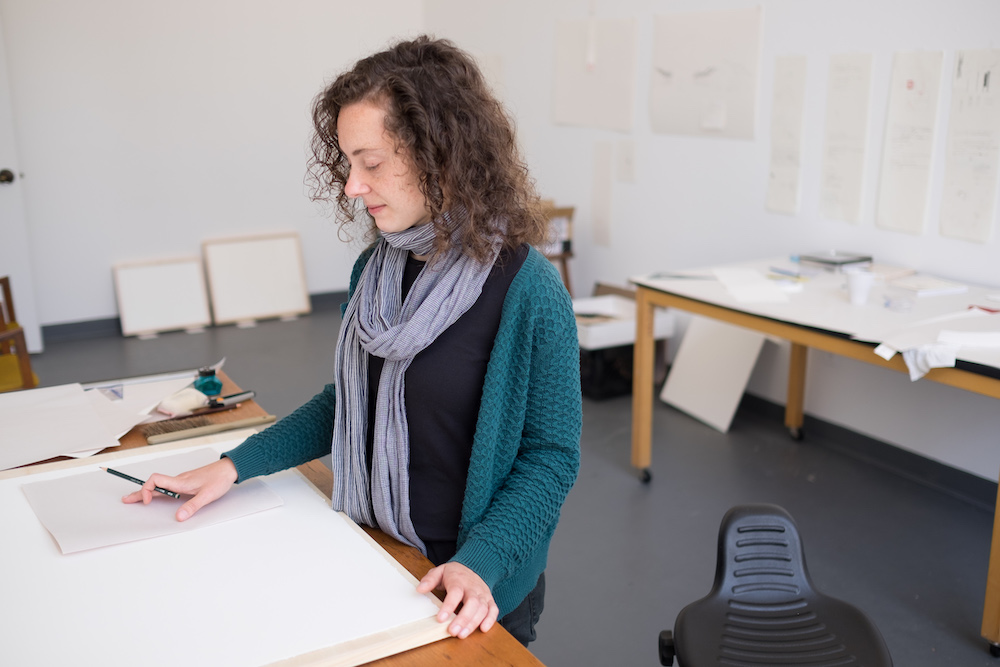
The inaugural A+P+I artist residency welcomed Zarouhie Abdalian, Jacqueline Kyomi Gork, and Weston Teruya to campus.
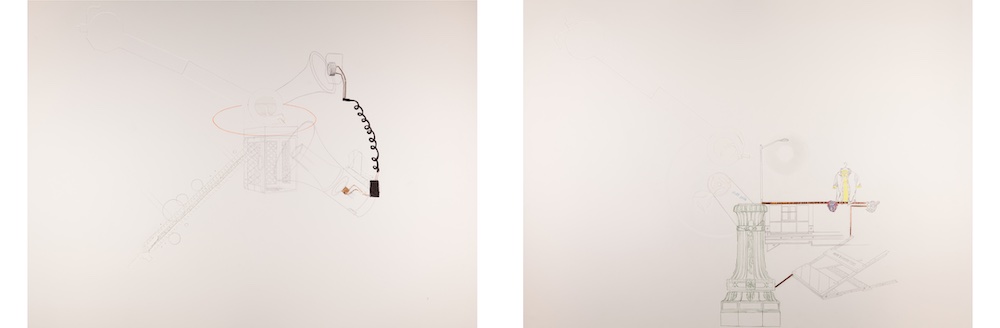
During her A+P+I residency, Zarouhie Abdalian created drawings that a reflected upon past projects. Interested in a location’s history, architectural features, and social spaces, Abdalian transforms the viewer’s physical and emotional understanding of an environment through subtle sculptural and aural interventions.
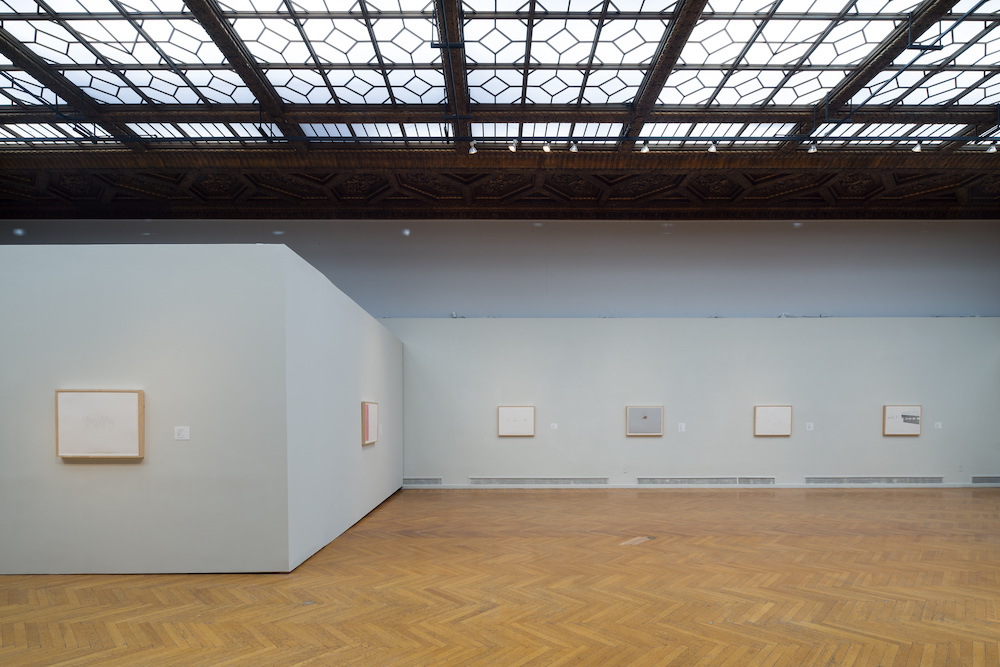
The drawings explored underlying ideas behind the works, pulling together common threads. Rather than descriptive or schematic, the works functioned as evocations of an idea or central quality of the earlier installations.
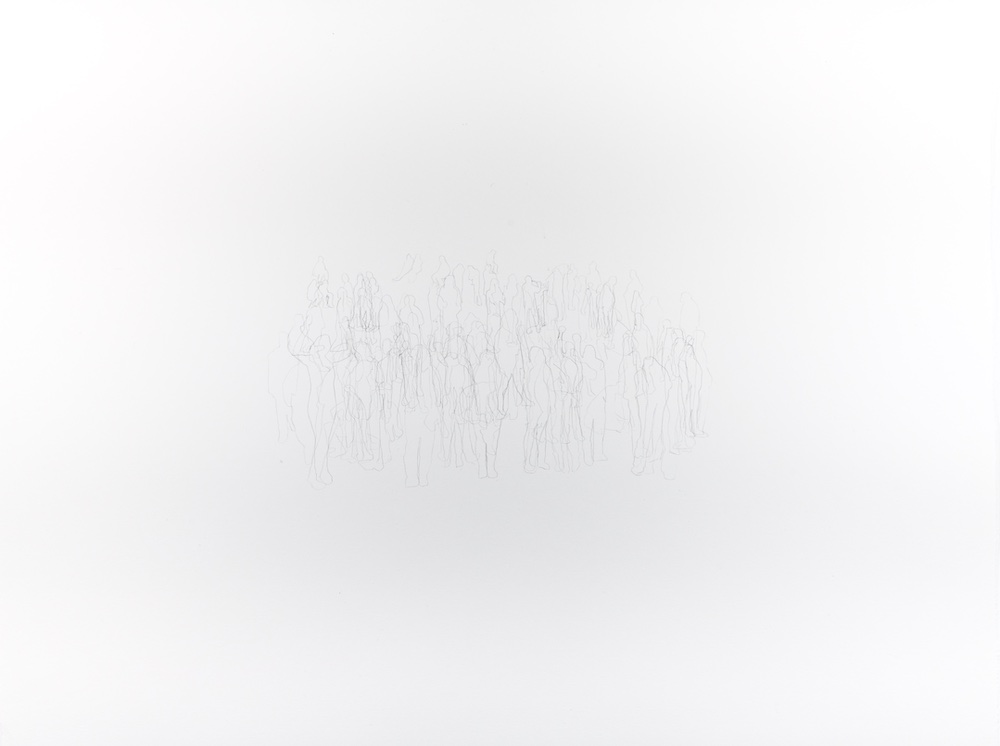
At the end of the residency, MCAM acquired Abdalian’s Occasional Music “here out of nowhere, hailed” (2015) based upon her earlier project, Occasional Music, created for SFMOMA’s 2013 SECA Art Award exhibition. Occasional Music was a sound-based installation that consisted of brass bells placed on the rooftops of buildings near Frank Ogawa Plaza in downtown Oakland that chimed in concert once daily, at random times throughout the day.
Jacqueline Kiyomi Gork’s artistic research focused on the physiological and psychophysical effects of music and sound on the body.
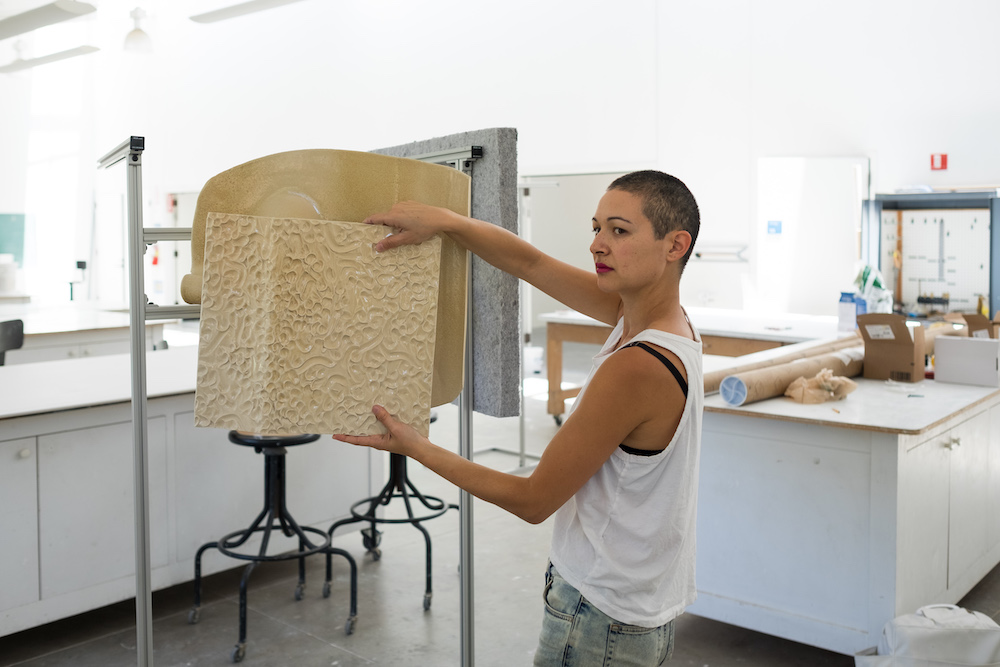
Their installation was part of an on-going investigation into how the perception of sound can be influenced by surface, mass, and material.
In A Healing, Gork was interested in how the relationships among sound, environment, and experience—the structure of the surrounding walls, the textures of the materials that cover them, the feeling of balancing on a yoga ball—create an experience of listening that is both felt and heard.
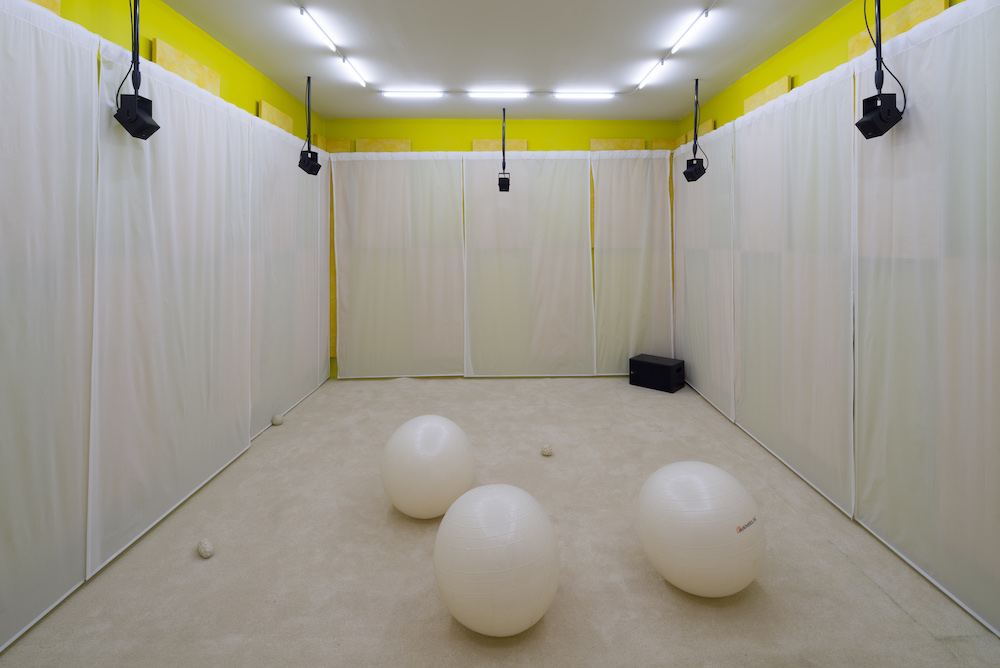
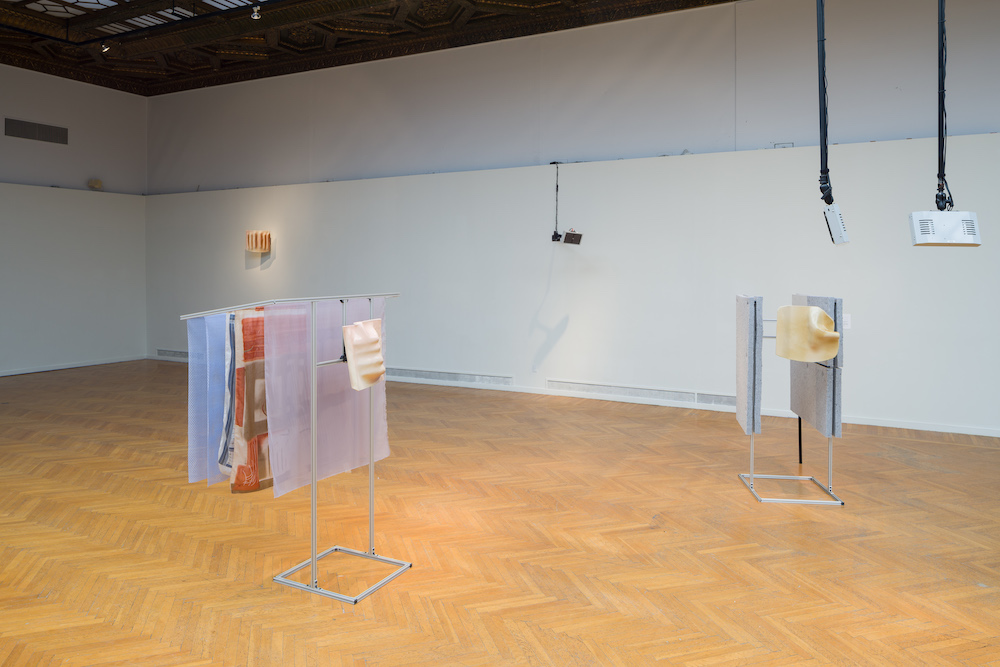
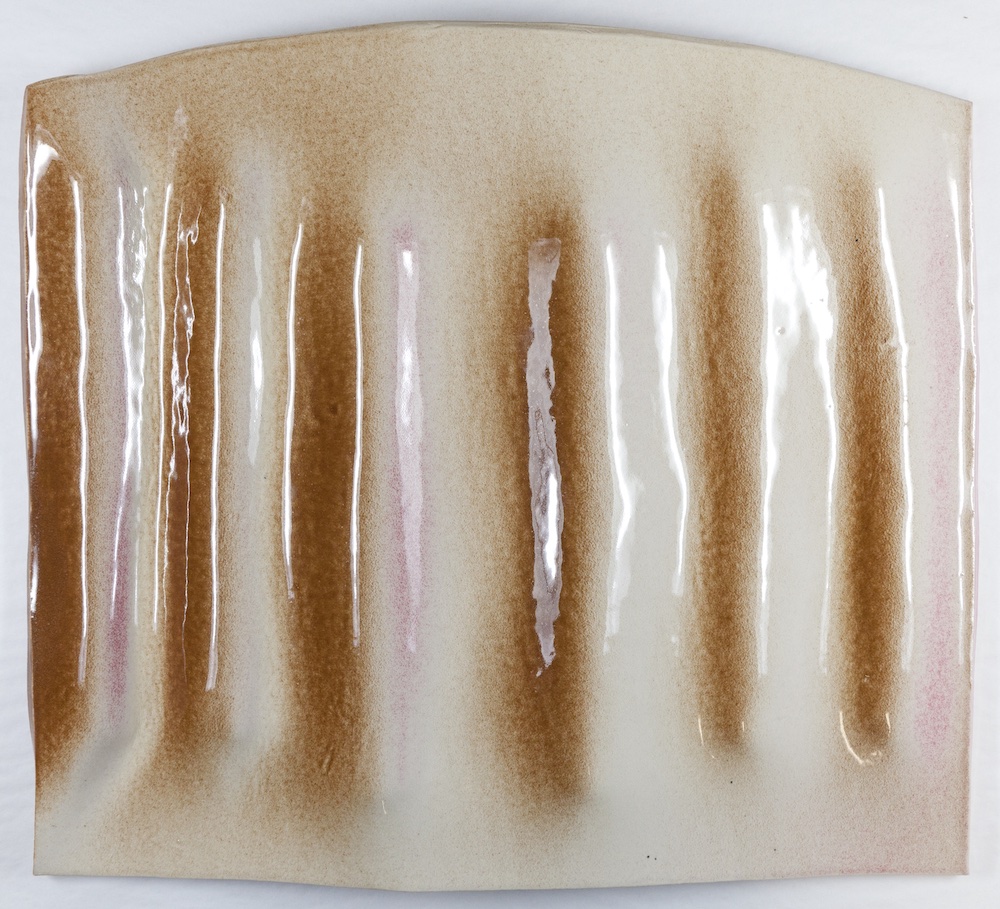
In related sculptures, they used high-frequency directional speakers to reflect sound into hand-made ceramic diffuser tiles. Gork chose ceramic tile, felt, and fabric to complicate the sonic experience in unexpected ways.
They were interested in the role of the viewer as a performer: where one chose to place oneself in relation to the directionality of the speakers determined how one experienced that sound in space.
At the end of the residency, one of Gork’s ceramic acoustic tiles was acquired for the collection.
Weston Teruya’s Means of Exchange (25th & Telegraph) was the first phase in an ongoing series of sculptural engagements with businesses and organizations on Telegraph Avenue at 25th Street in Oakland.
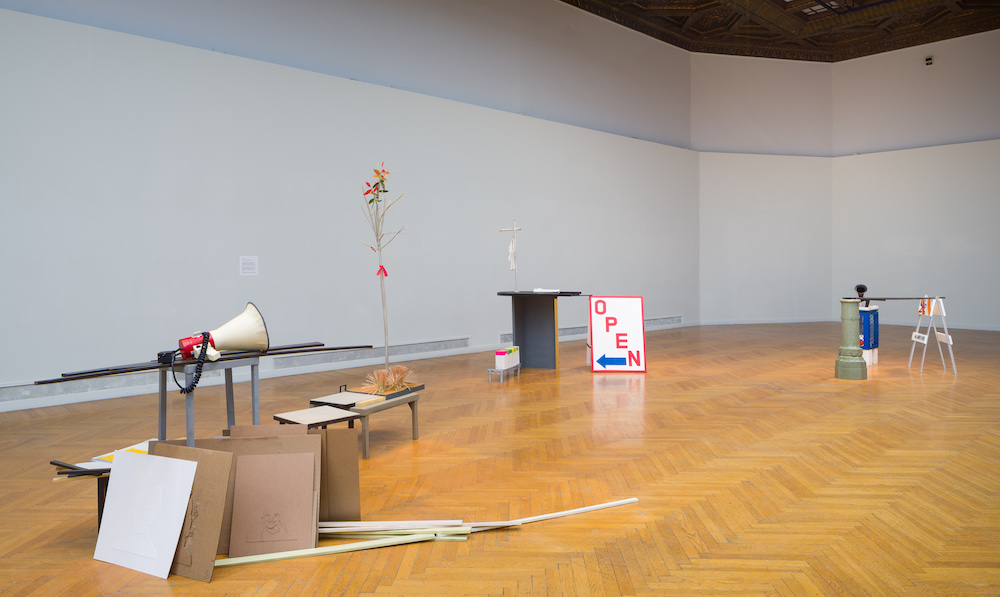
The project developed as a partnership with gallerist Patricia Sweetow and built upon the relationships she forged as she established Spun Smoke, a retail and project space at the corner of 25th and Telegraph after her gallery was pushed out of San Francisco. The space was a newcomer to this incredibly diverse stretch of the city with a collection of small, mostly culturally specific storefronts.
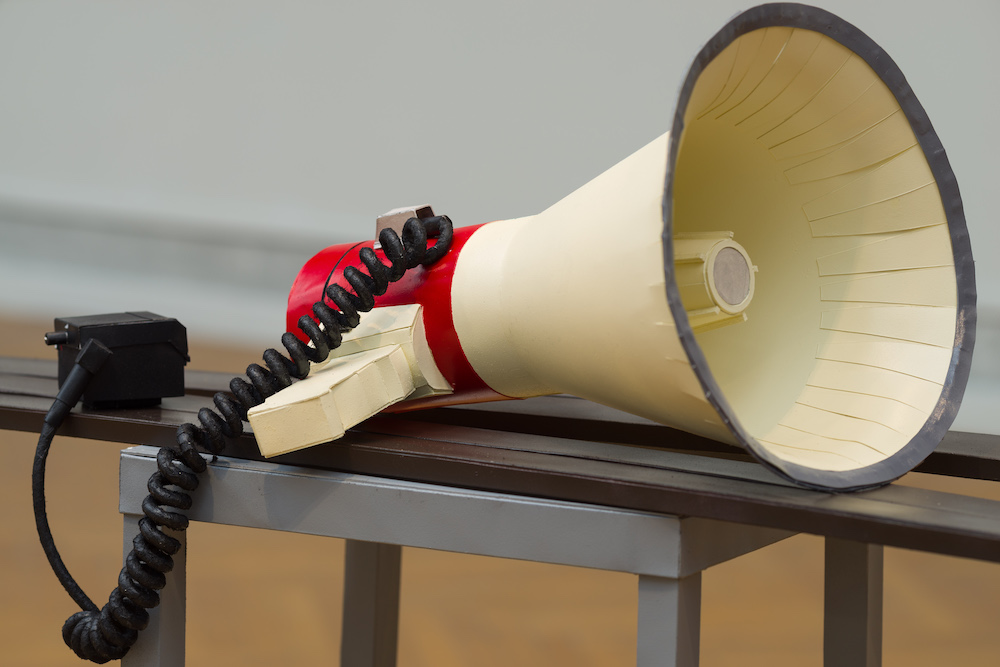
Teruya created specific works which built upon or commissioned the skills and expertise of three businesses and organizations in the neighborhood, namely a dry cleaner and tailor, a vinyl record shop, and a community space dedicated to highlighting issues of police brutality.
The paper sculptures examined the hidden social histories of a site to creatively reimagine how urban landscapes are shaped.
At the end of the residency, three of Teruya’s pieces related to this work became part of the MCAM collection.

A+P+I 2016: Carrie Hott, K.R.M. Mooney, Surabhi Saraf
Carrie Hott’s Structure for the Fugitive was a supportive framework for 17 pieces of lace given by Mills alumnae to the Mills College Art Museum between 1931 and 1933. The circumstances that led to the multiple donations of lace by these alumnae are unknown. These 17 pieces are clothing segments—cuffs and collars—possibly separated from their original garments.
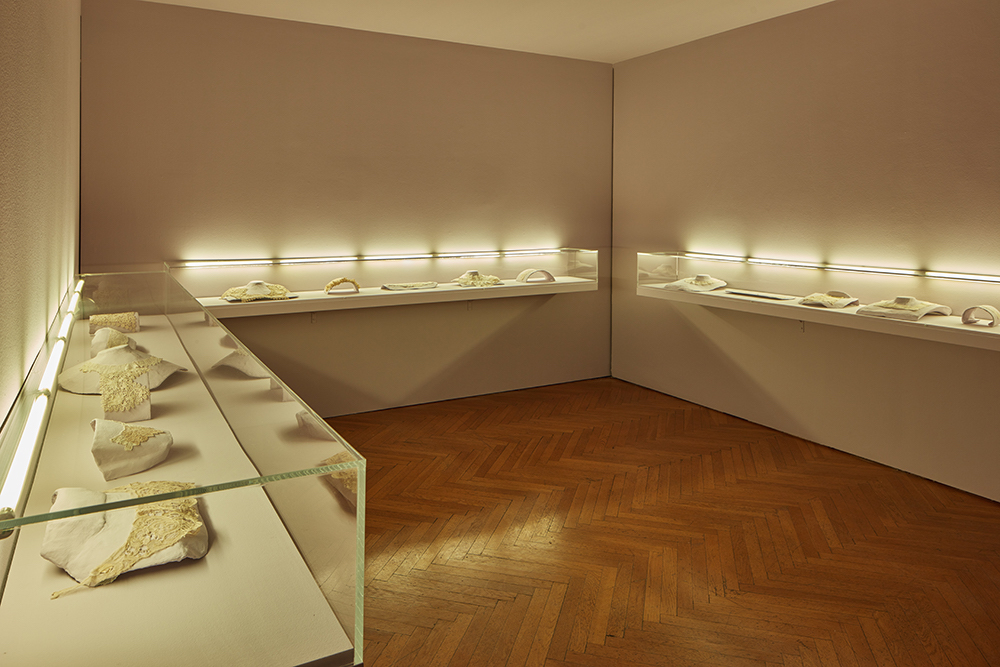
They are at least 100 years old, light sensitive, and prone to damage if not handled carefully. Hott provided the pieces with infrastructure, considerate of their fugitive state, both physically and symbolically, enabling them to be displayed, possibly for the first time.
As each piece lays over a supportive armature, they act as proxies for their former owners and are shown as they would have been when still attached to their original garments, gesturing toward the invisible bodies that once wore them. Separated from a larger garment, they become a freestanding network or ornamental tableau of nodes and connections. They are weightless and now functionless, acting as markers of history and lost memories.
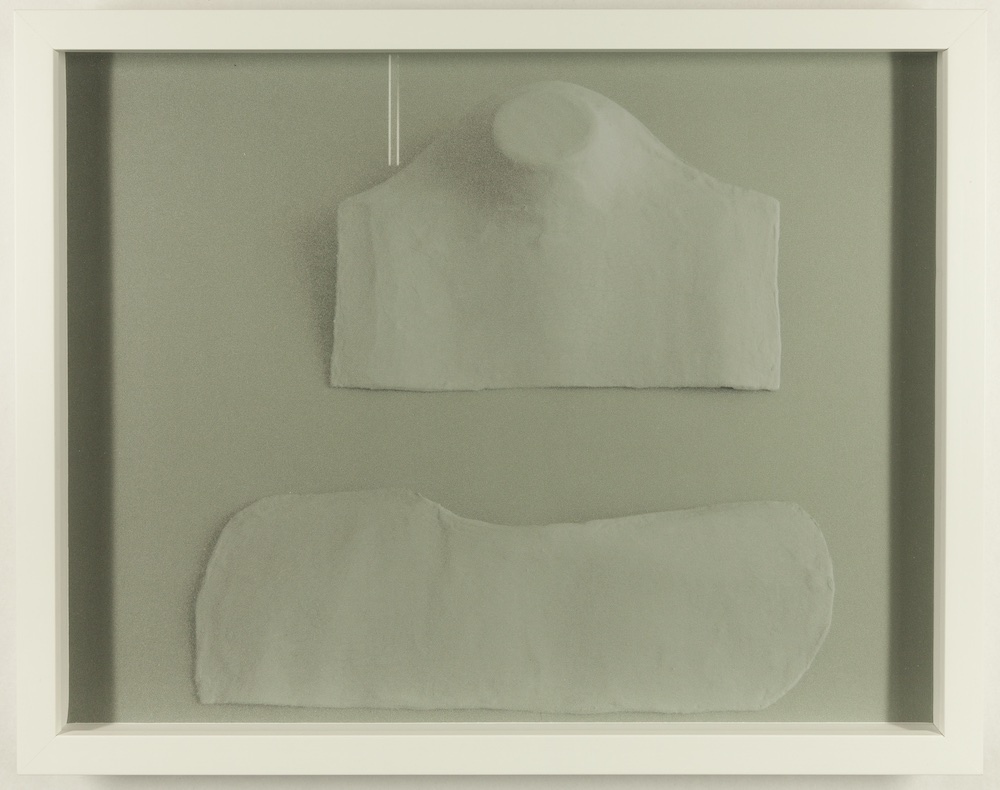
Outside of the lace room, photographs of the empty supportive armatures display their own fugitive qualities. They attempt to provide physical form for memory loss and the slipperiness of history and transience. Hott’s Support II (2016), became part of the MCAM collection.
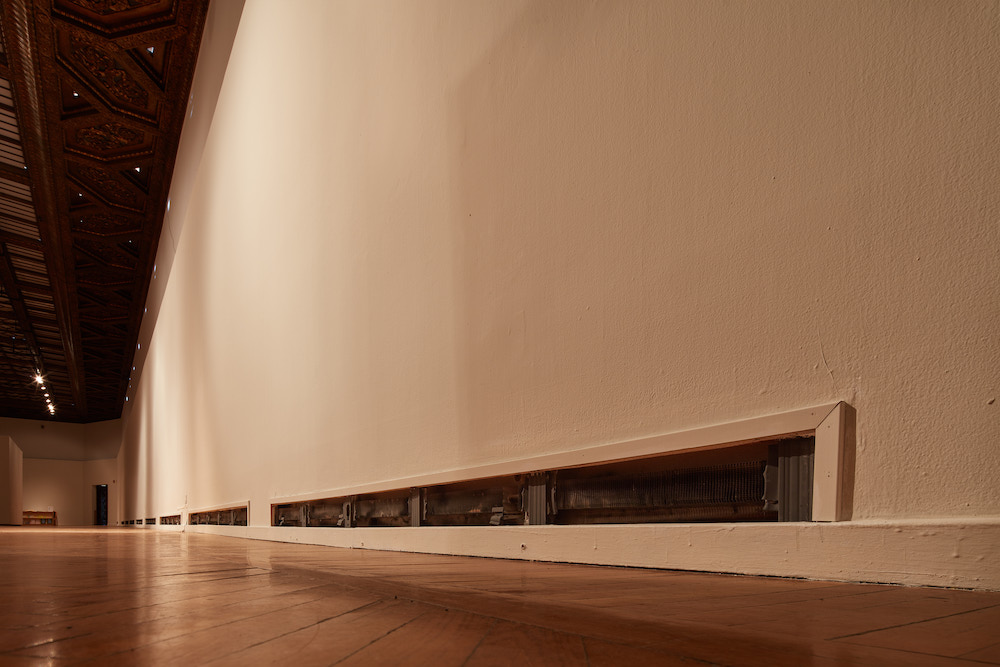
K.R.M. Mooney’s N I- XVIII, S I - XVIII, consisted of subtle interventions in the museum’s architecture to explore the intersections of objects, bodies, and space. Mooney creates work that disrupts existing regimes of authority, legitimacy, and use, forcing viewers to recalibrate their perspectives on where and how to look. In exposing the interior of the gallery walls, this site-specific work simultaneously revealed and obfuscated a physical history of a space that is often overlooked or deliberately masked.
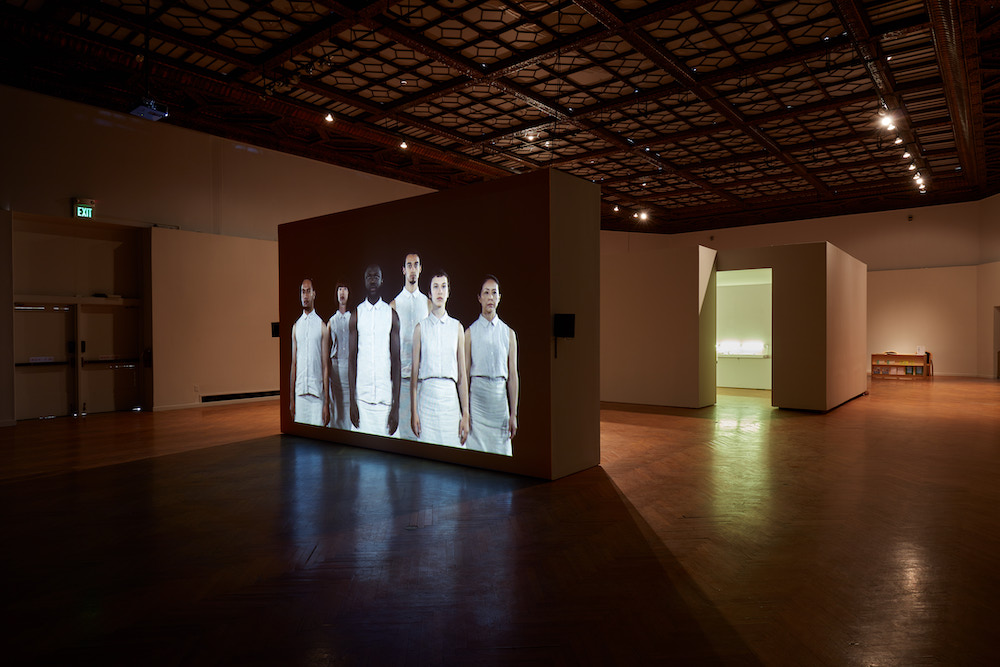
Surabhi Saraf’s video, Intensities, examined stillness as a way of living with our intensities and using them as a re-potentializing force. The work was a response to the excess of positivity that drives our current digital culture. Exploring stillness not just as a private, solitary state, but also as a public one to resist, protest, and rethink our future in a techno-capitalist and hyper-connected society.
A+P+I 2017: Sofía Córdova, Sanaz Mazinani, Genevieve Quick
The 2017 A+P+I artists-in-residence, Sofía Córdova, Sanaz Mazinani, and Genevieve Quick, worked with video and sound installations, performance, and sculpture to explore questions around futurity, technology, and identity.
Sofía Córdova’s BILONGO LILA: Nobody Dies in a Foretold War (documentation) 5.27.2017, documented a new media performance at the Mills College Greek Amphitheater.
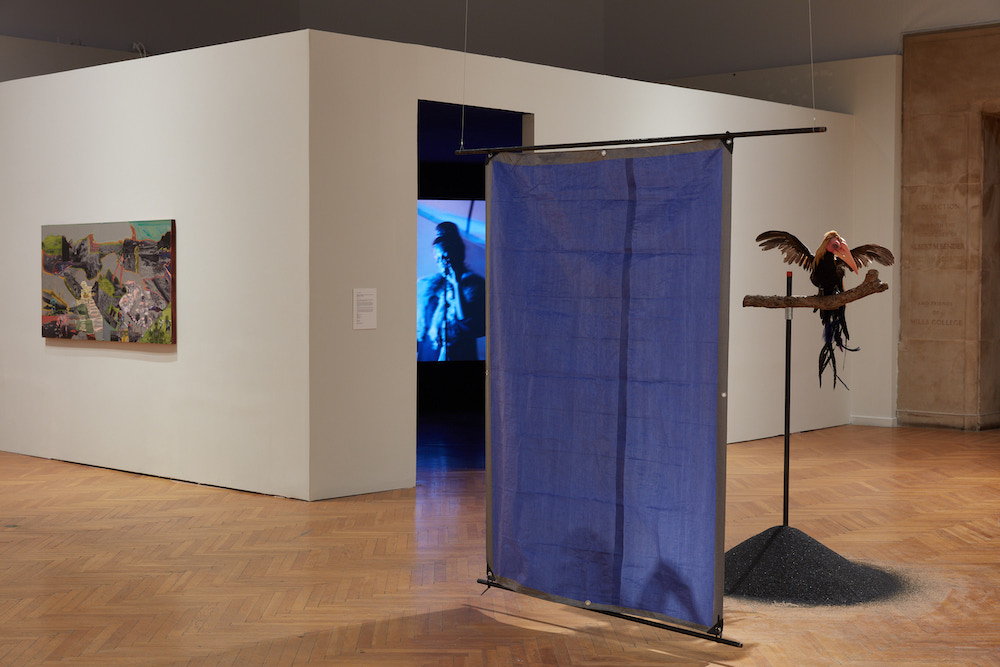
The piece took the audience through a hyper-digital, psychedelic vision of our planet 1500 years in the future.
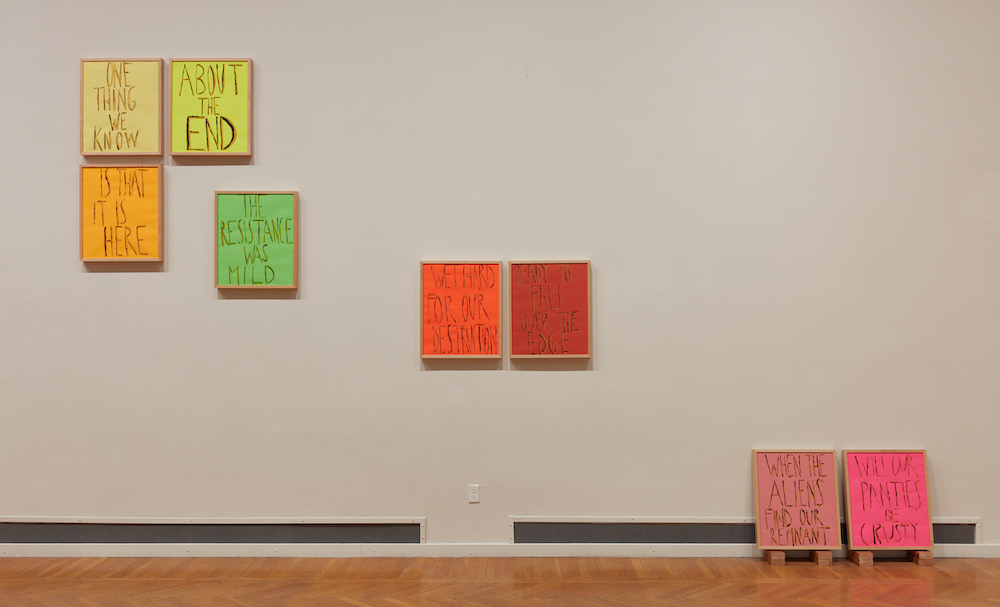
The performance and installation flesh out the slow ecological decline of earth—advanced by white patriarchy and late technological capitalism—as it leads to a traumatic break in historical continuity and an opportunity for cultural rebirth for those that remain. In particular, the works investigate what this future might mean when used to imagine alternative realities for marginalized communities.
Sanaz Mazinani’s Practicing Perception deconstructed the traditional roles of the art museum as collector, archivist, presenter, and interpreter of cultural objects and visual experiences.
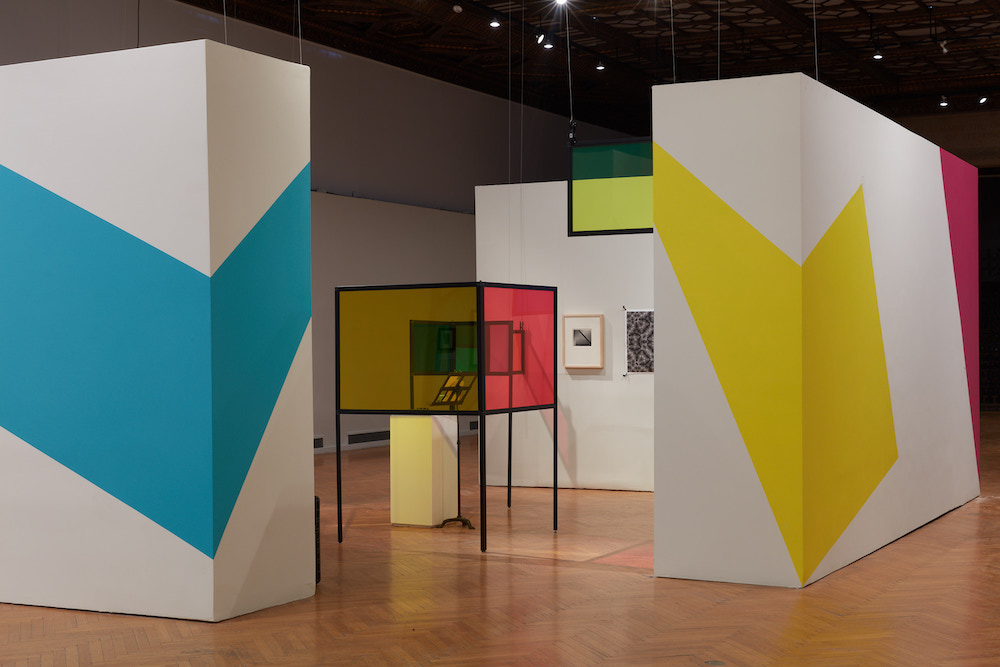
Constructing her own “white cube” within the gallery, Mazinani paired works from the MCAM collection with her own interventions, offering viewers an opportunity for multi-faceted experiences that open up new ways of seeing and understanding the museum’s collection and the purpose of exhibitions.
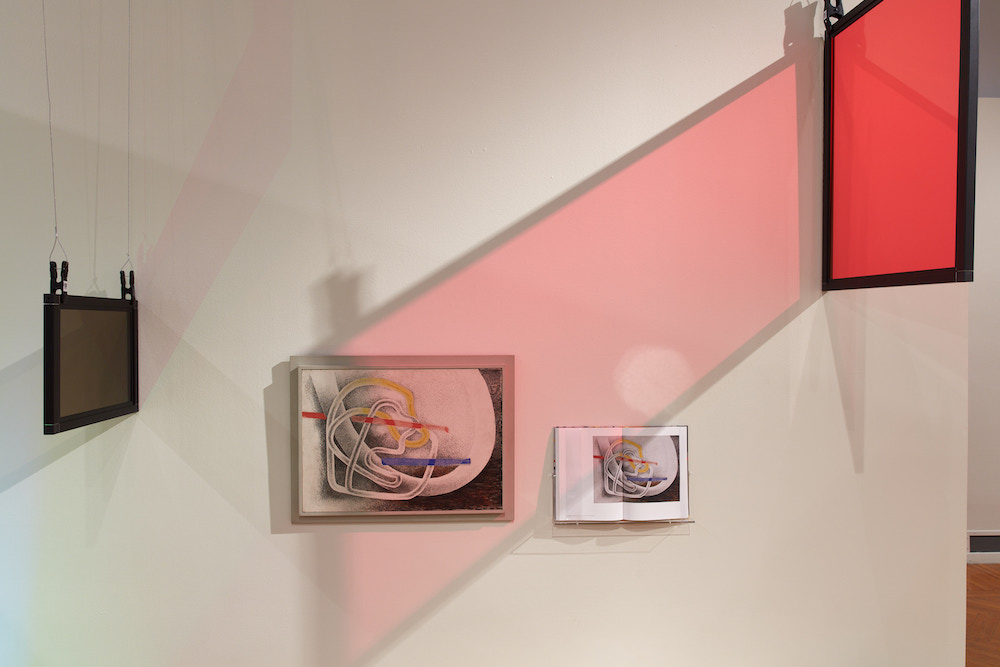
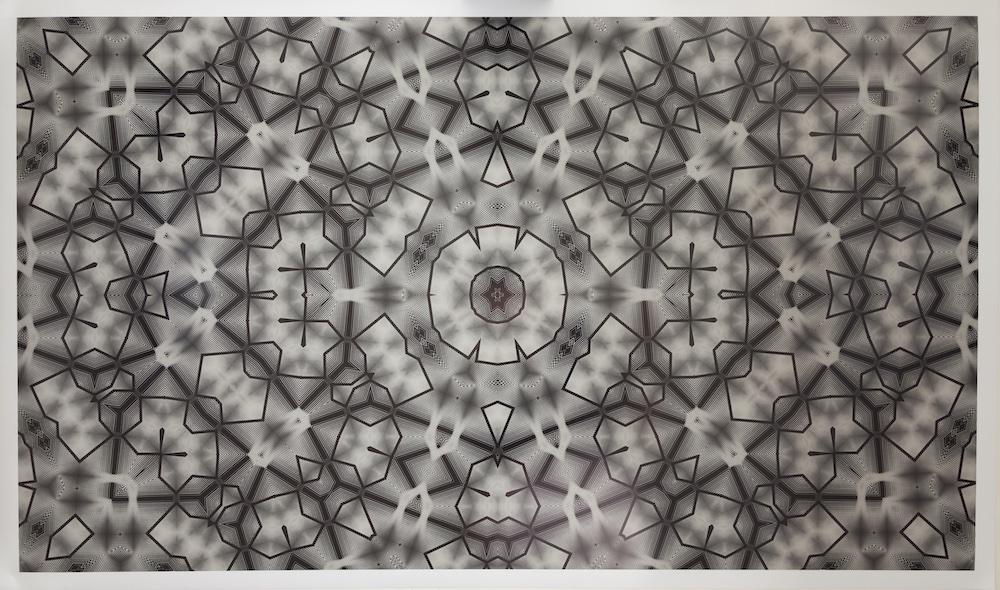
Interactive sound allowed viewers to take in the pieces aurally as well as visually, adding an additional level of engagement and meaning to the featured works.
Mazinani’s Reflected Water Wave Reflected (After Berenice Abbot) was acquired for the MCAM collection.
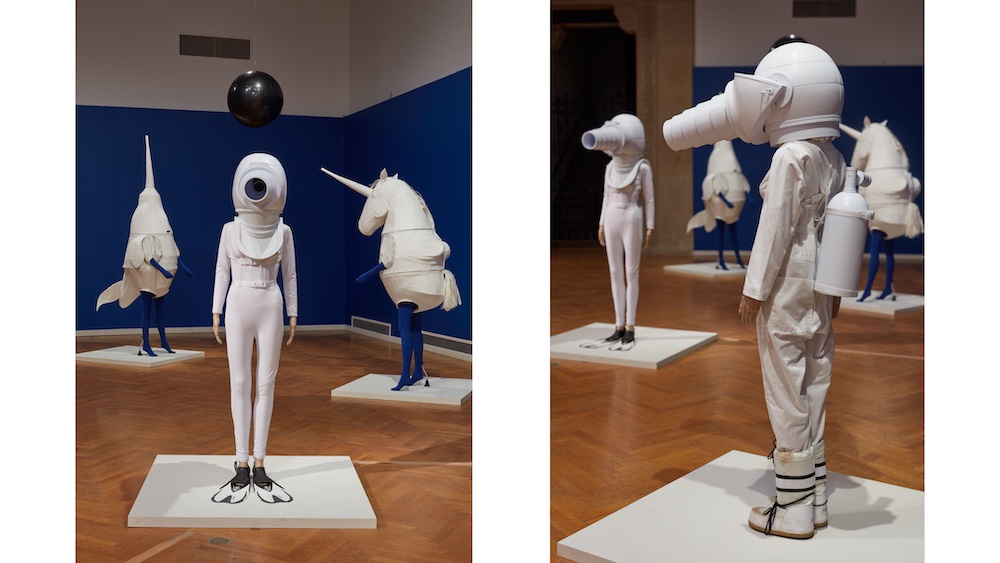
Genevieve Quick‘s Project Narcorn explored the parallels between the deep sea and outer space through a video installation and sculptures.
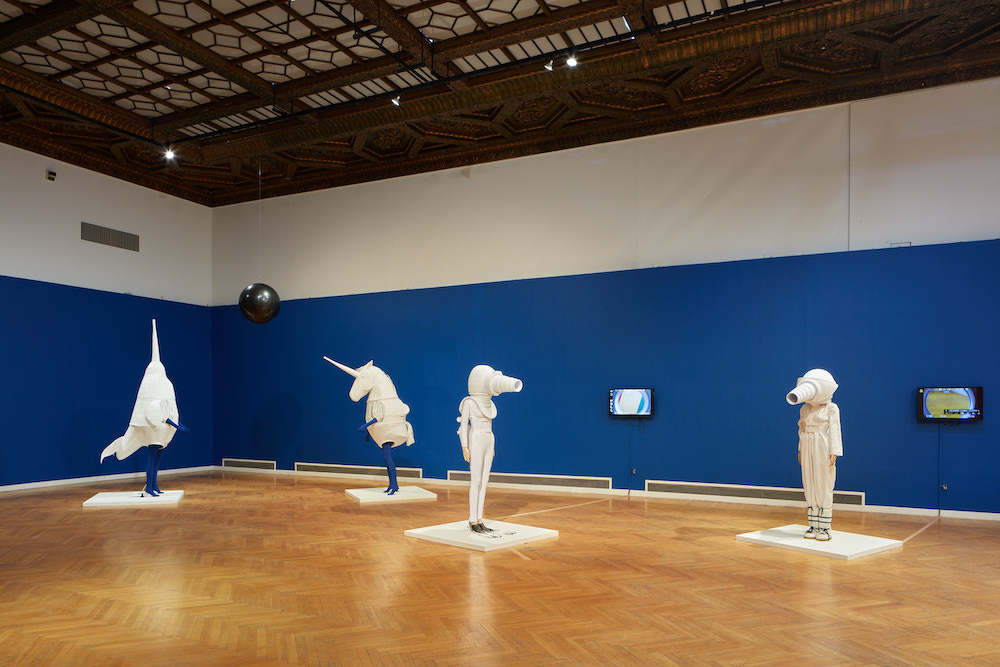
The video chronicled a deep-sea diver and an astronaut as they journey below and above our atmosphere where they transform into their avatars—a narwhal and a unicorn. The work uses metaphors and humor to explore fantasy, science, and otherworldliness.
A+P+I 2018: Indira Allegra, Rebeca Bollinger
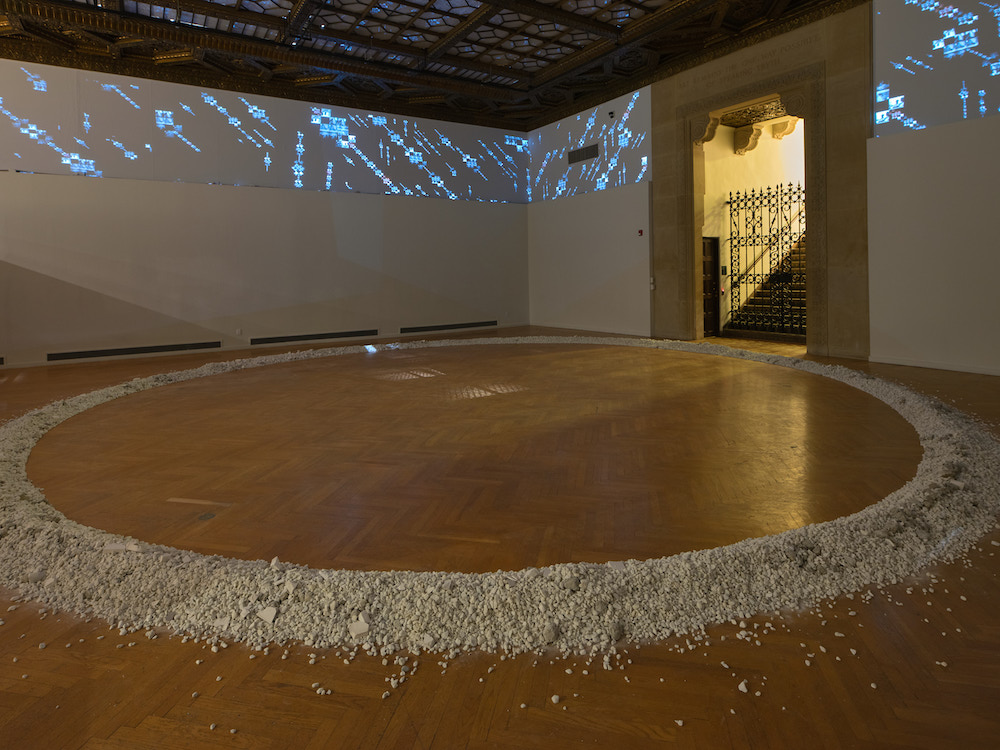
At Mills, Indira Allegra continued her Open Casket series with Open Casket IX. Tension is Allegra’s creative material, as she explores responses to political and emotional triggers through sculpture, poetry, and performance. She used the weave structure of crepe, a textile commonly used to line the interior of caskets, as a starting point to create a new kind of memorial—one that explores the irregular, cyclical nature of grieving for those affected by police violence. Online expressions of mourning became a digital fabric that spoke; the installation meditated on the role of digital media in the grieving process and the tension between immaterial and material realities when coping with death.
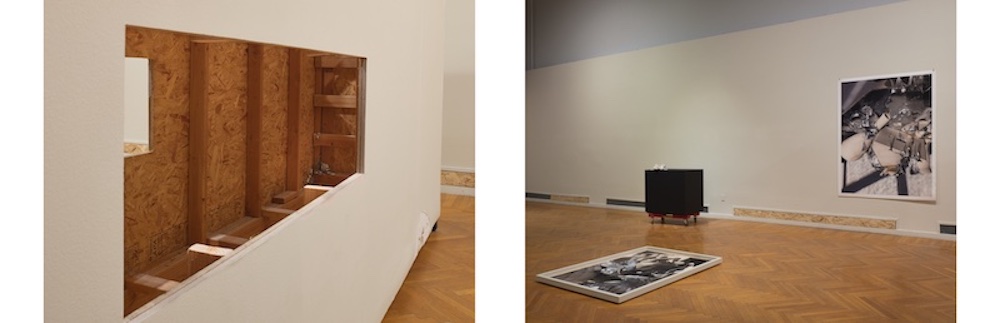
Rebeca Bollinger also used her residency to continue an ongoing project, Catalog of Stains, developed while the artist observed a loved-one’s cognitive decline. The “stain” is evidence of marked time, ingrained experiences that influence and inform our greater understanding. When these stains are in disarray, objects and environments take on new meanings—the mind grapples with interpretation, underscoring the vulnerability of perception.
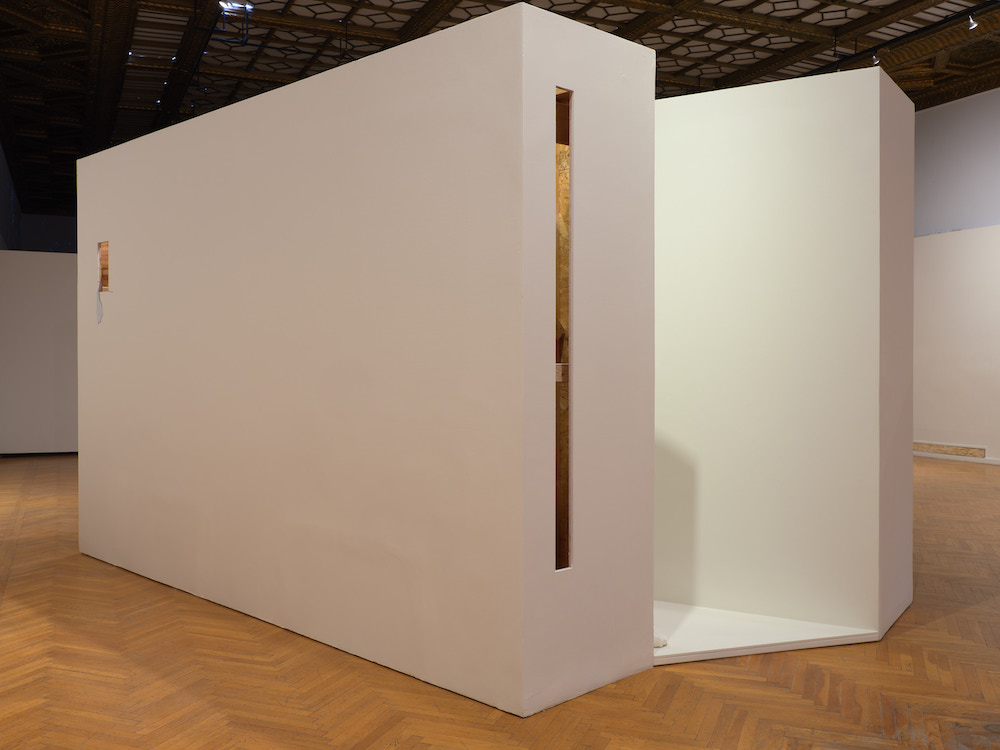
In her 2018 installation, Into the Matter, Bollinger revealed stains using spatial disorientation—integrating the architecture of the exhibition space among her large-scale photographs and sculptures. By marring, slicing into, and building upon the architecture itself, she created an installation of shifting sightlines and visual passages into the interior foundations of the gallery walls, ceiling, and floor. In this curated perspective, once functional elements of the building are recast as abstract objects and repetitions of form.
A+P+I 2019: Constance Hockaday, Cate White
2019 artists-in-residence Constance Hockaday and Cate White were selected for art practices that explored the human condition and confronted issues of social space and belonging.

Constance Hockaday’s project FutureHellNow was part of the artist’s Survival Series, an ongoing inquiry into American ideas of disaster and futurity. FutureHellNow was both an installation and a performance space in which Hockaday constructed a potential domestic reality that made visible our ever-present internal alarm and perpetual panic amidst ongoing disasters of global and historical proportions.

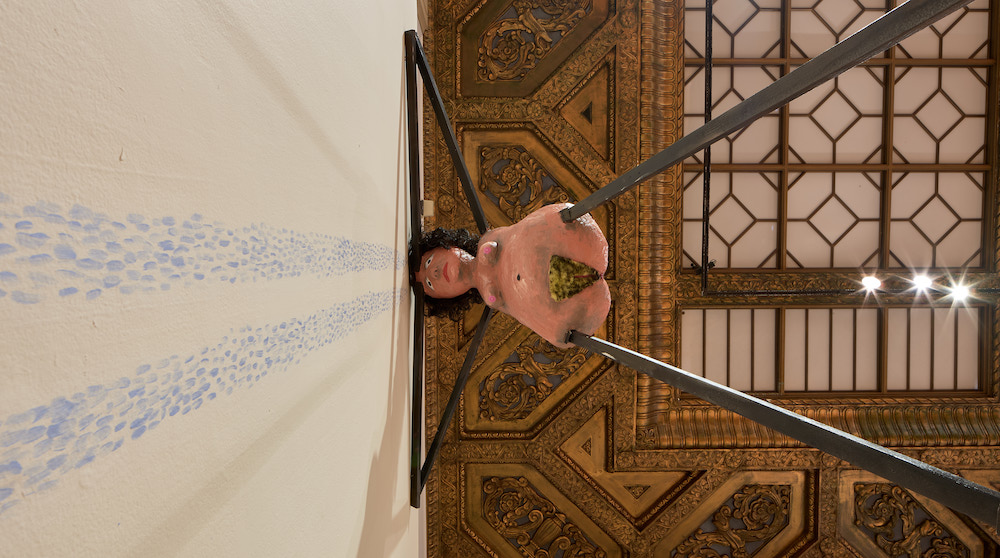
Cate White asked: what happens when we allow ourselves the freedom to evolve? What do we lose and what do we gain? Works made during the first half of her residency highlighted subjects and themes the artist had frequently explored before: cultural constructs of gender, race, power, and beauty, and how emotional intimacy allows for new perceptions.
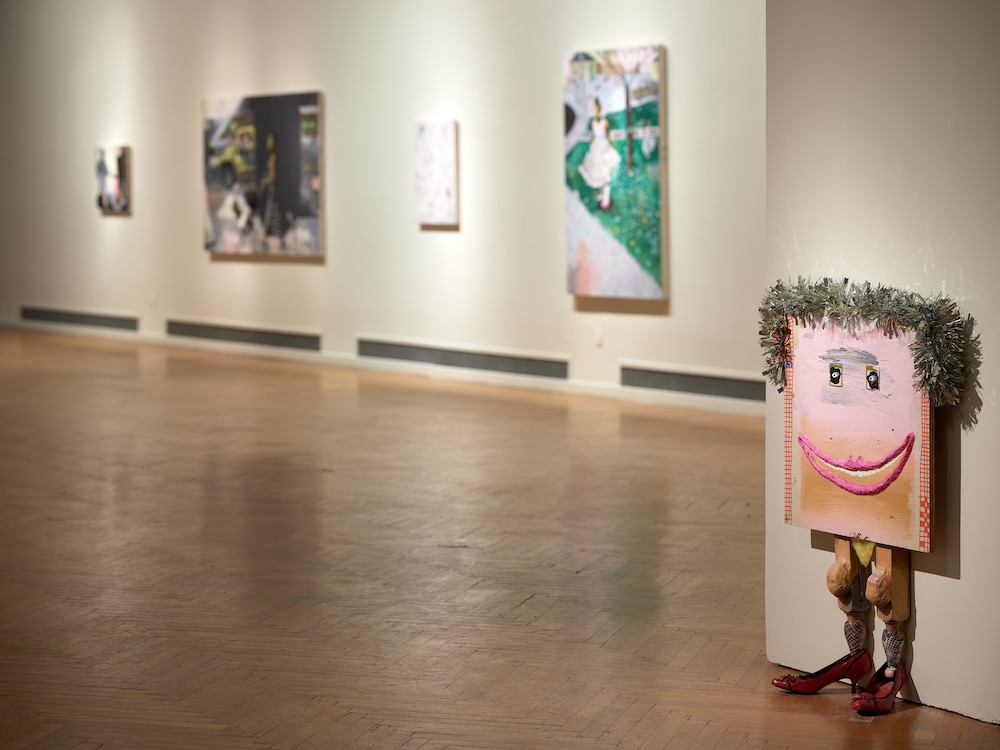
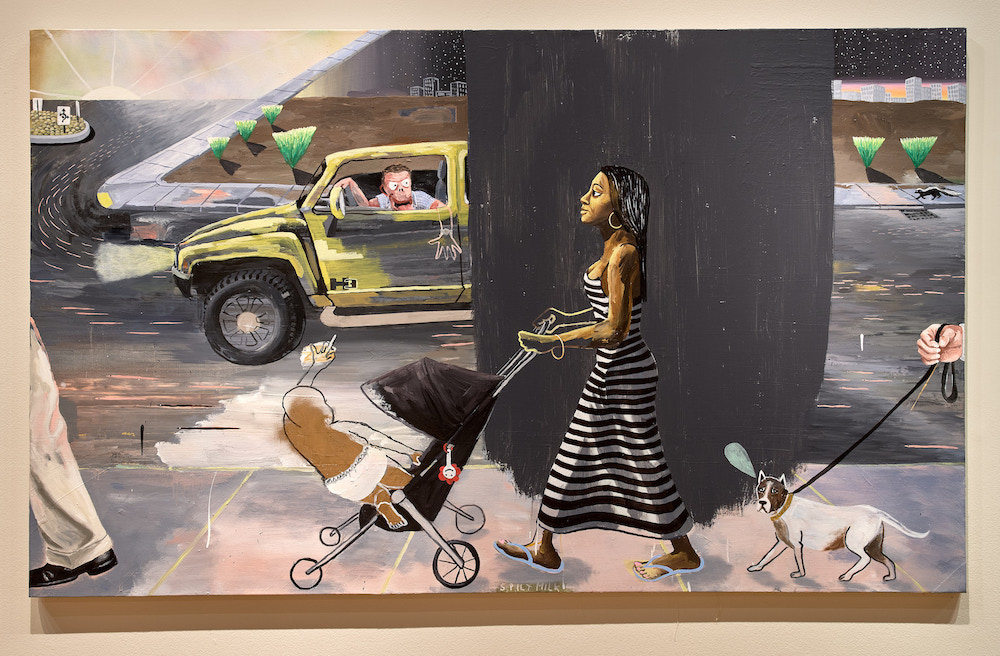
Later works—experiments in painting and sculpture, video performance, plein air painting, and a sketchbook zine—tracked the evolution of her work during her residency, marking a transformation in her approach to art making. Her installation of three videos, How Do You Paint? With Cate White, documented White’s takeover of the MCAM Instagram account, where she first began her, as she describes, “dysfunctional Bob Ross-inspired” instructional painting show.
A+P+I 2020-2022: Craig Calderwood, Christy Chan
Shortly after Christy Chan and Craig Calderwood began their A+P+I residency in January 2020, the Covid-19 pandemic hit, and the campus was shut down.
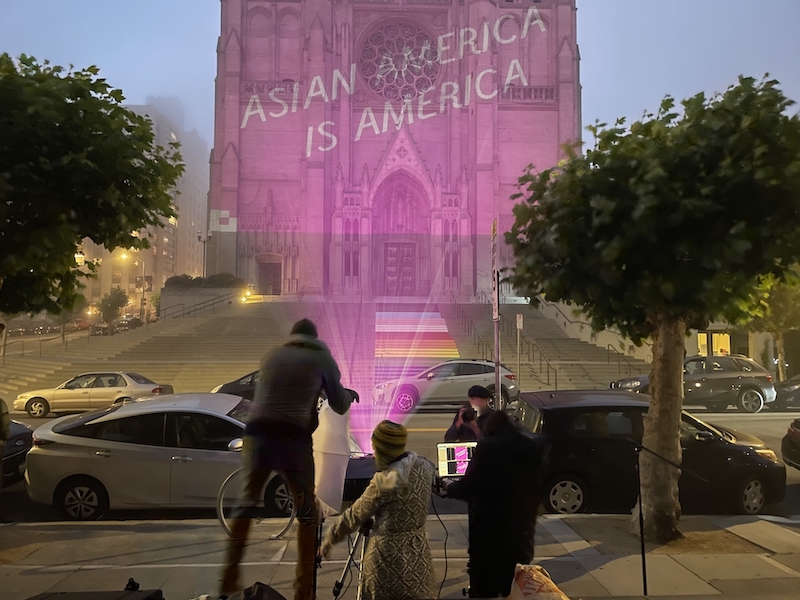
In early 2021, in response to the growing epidemic of violence against Asian Americans in the United States, Christy Chan reached out to MCAM staff with an idea for a mobile, guerrilla public art project that would beam images and messages of resilience by Asian American artists in English and eight different Asian languages onto the walls of high-rise buildings throughout the Bay Area.

In a time when the right to belong of Asian Americans is being questioned, taking up space matters. Asian Americans have been in the U.S. since the 1800s . . . this project is about Asian Americans unapologetically taking up space, celebrating each other’s presence, and not asking permission to do so. 3
-Christy Chan
In 2022, Chan’s project, Patterns, invited the public to examine America’s intergenerational privilege and culture of gaslighting when confronting racial and social inequities. Chan decolonized an 1890s fainting couch and transformed it into a touchable art and conversation piece. She posed an important question: who gets to be fragile and who has to be strong? To create the associated video installation, Chan filmed Mills College students fainting on the couch, and provided a series of prompts to answer anonymously, which were compiled into a slideshow.
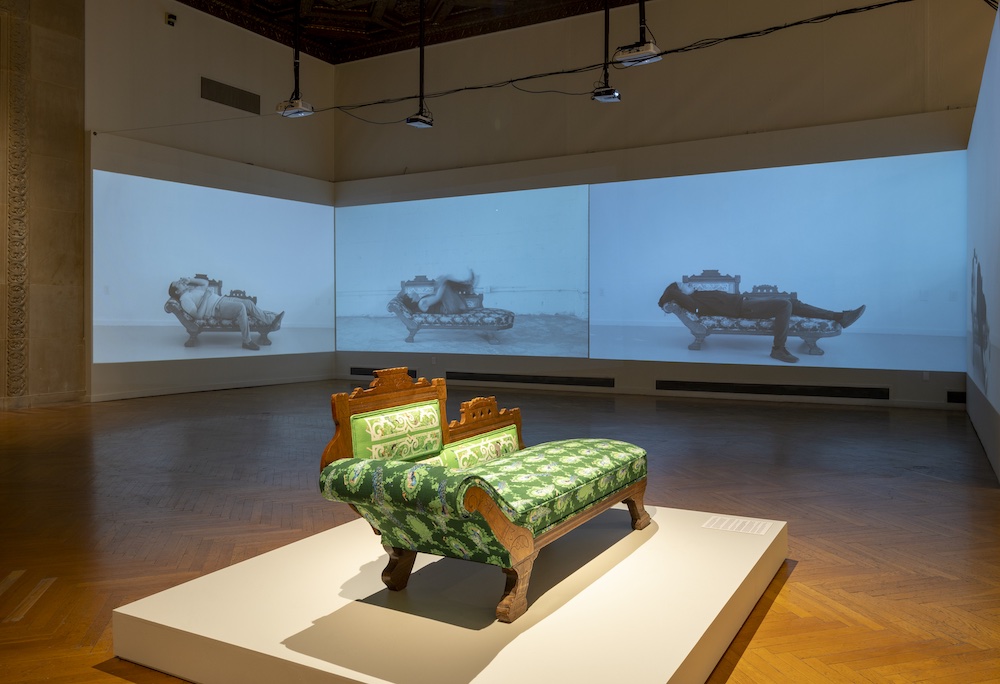
The title Patterns referred to both the physical elements of the works and the context of critiquing patterns of white complicity in the United States.
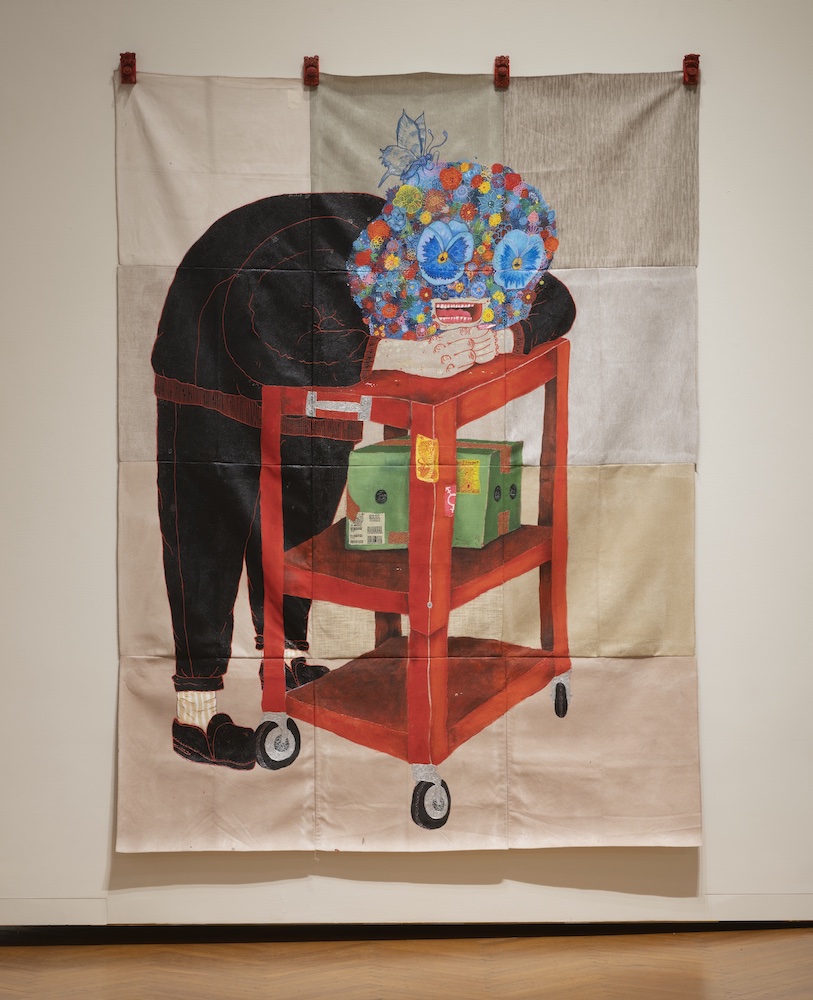
In her practice, Craig Calderwood uses commercial craft materials—fabric paint, polymer clay, and found fabrics—to create intricate decorative works that speak to queer and trans communities through a shared language of symbols and patterns. Recalling the private languages that underground communities of queer and trans people used for safety for decades, Calderwood develops these images through research into history, personal narratives, and pop cultural moments.
Calderwood’s project, The Light Bulb Sound, shared elements of her creative process, including preliminary drawings and notes, alongside finished paintings.
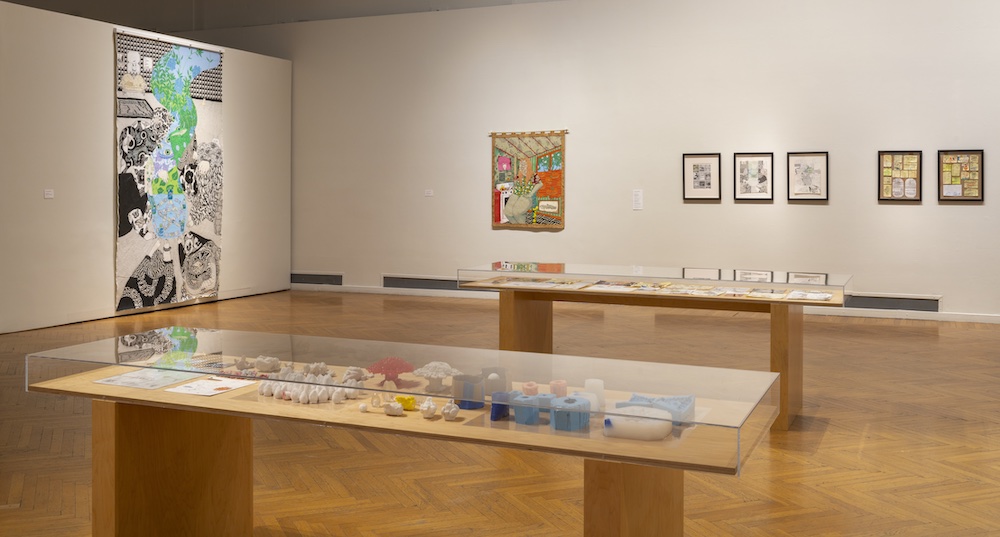
The exhibition shared the push and pull of failure and the transformative process that each piece goes through.
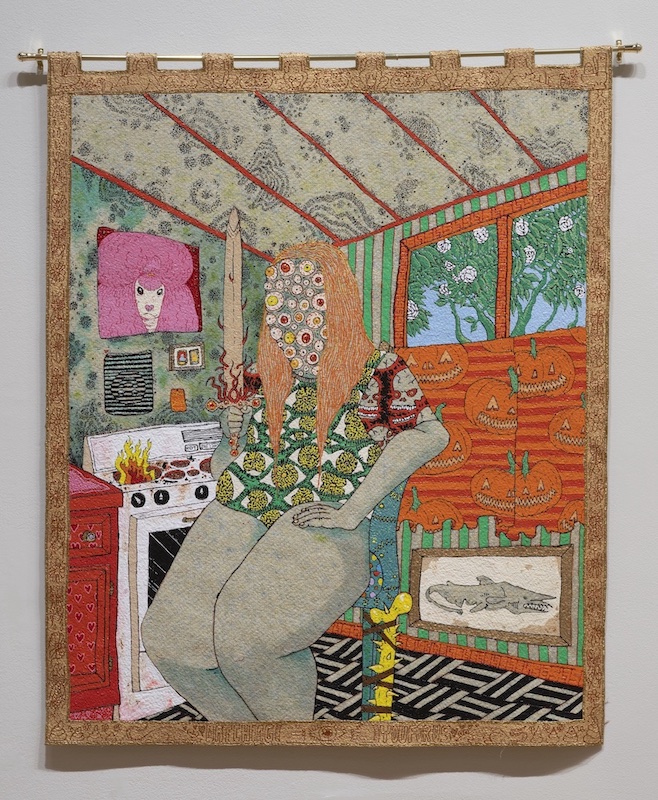
After the exhibition, MCAM aquired Calderwood’s Pig Hair Sword for the permanent collection. Since then, the piece was exhibited in 2024 and 2025 and has been written about by students in the First Year Writing program.
A+P+I 2023: Liat Berdugo, Heesoo Kwon, Ranu Mukherjee
In 2023, artists were selected for their innovative work with digital technology, so that the residency would better engage with Northeastern University’s focus on the future of artificial intelligence (AI) and machine learning. Liat Berdugo, Heesoo Kwon, and Ranu Mukherjee shared approaches to artmaking that engage technology and performance to explore issues including migration, personal and political power, and the environment, from feminist perspectives.
In Liat Berdugo’s video Shattered Reflections, an artist-in-residence, student, and museum director at a women’s college grapple with changes resulting from the college’s acquisition by a large university across the country.
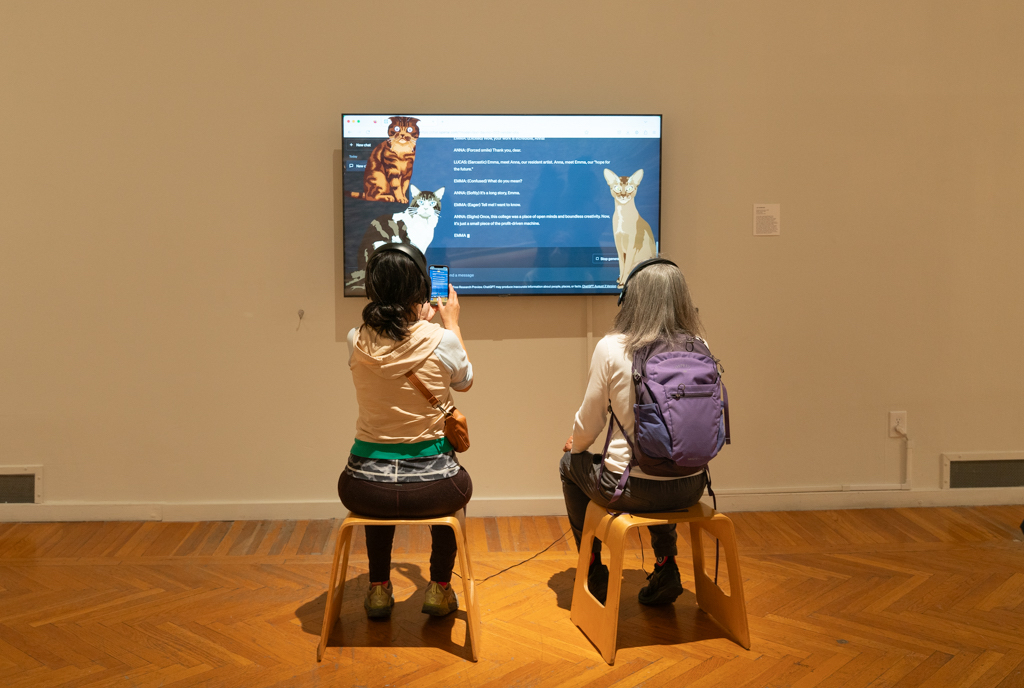
The video script was written by ChatGPT, released in December 2022, and reveals many biases about art, education, race, privilege, and technology. Characters in the video are portrayed by animated by cats—an early icon of the internet. The work culminated with a song performance that the artist commissioned a gig actor from Fiverr.com to produce, using the lyrics written by ChatGPT.
Berdugo’s multimedia piece Seeing It for the Trees—video, book, and installation—explored her Israeli American heritage and her experience of motherhood during the pandemic.
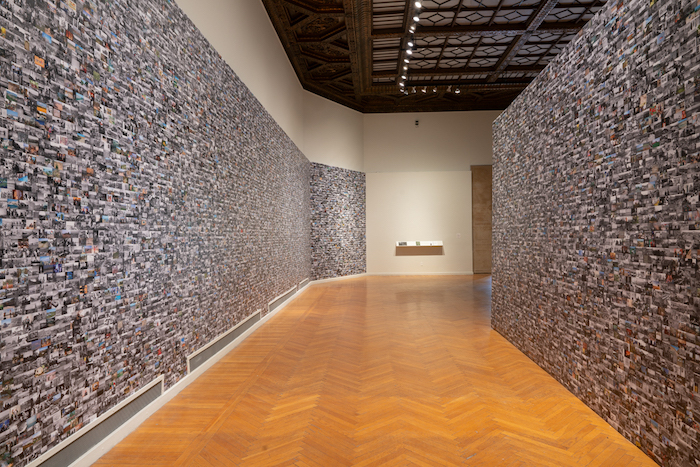
Central to the project was a computational bot the artist wrote to “scrape,” or download, the 50,000+ images of the Keren Kayemet LeIsrael—Jewish National Fund’s (KKL-JNF) online photo archive; she then had the bot text her one image per hour for over a year. It was a kind of artistic prompt, one that engaged the interruptive rhythms of being an artist parent during the pandemic; as well as how visual interruptions from a bot can challenge the ideological frameworks in which we are reared.
Many forests planted by the KKL-JNF were strategically located on top of the ruins of Palestinian villages to prevent native Palestinian residents from returning and to erase traces of prior habitation. The artist was compelled by her own childhood experience planting a tree in the Jerusalem forest to unpack the legacy of Zionism as a settler-colonial project that she, as an adult, can no longer abide.
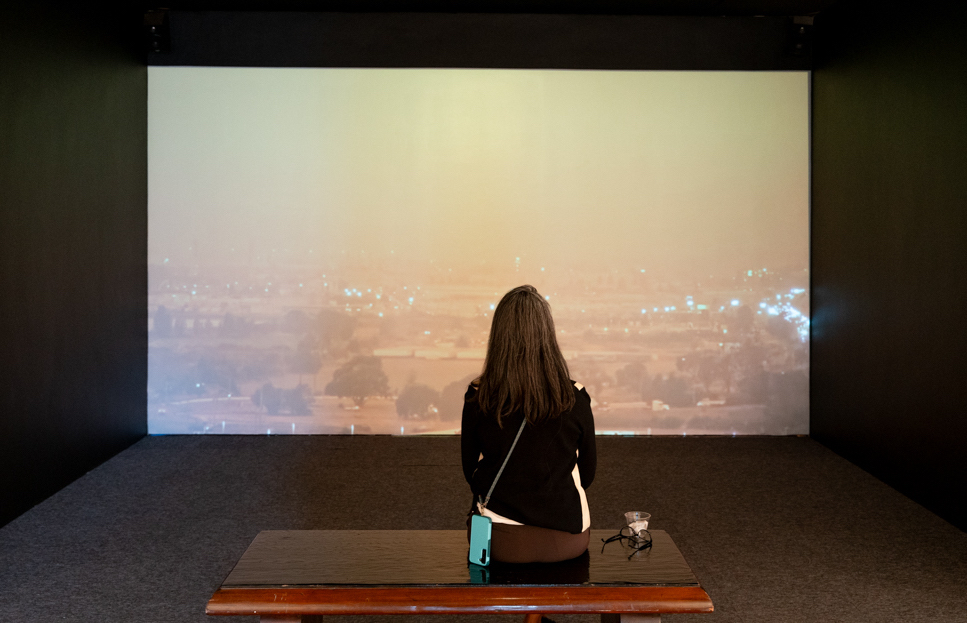
The work asks: what does it look like—and feel like—be anti-Zionist and still be Israeli? What does it mean to grapple with family legacies of politics, place, and homeland? And how do questions of family legacies become more urgent when one becomes a parent? Conversations with her Moroccan Israeli father became existential questions about making art as a parent, about selfhood, and about the kind of legacy she was passing on to her own son.
Heesoo Kwon investigated an archive of family photographs and home videos captured in the artist’s family residence in Il-won-dong, Seoul, Korea, where she lived with four generations of family members until age six. Although the artist has few memories of these early moments in her childhood, she has observed how women in her family were often portrayed as caretakers engaged in housework.
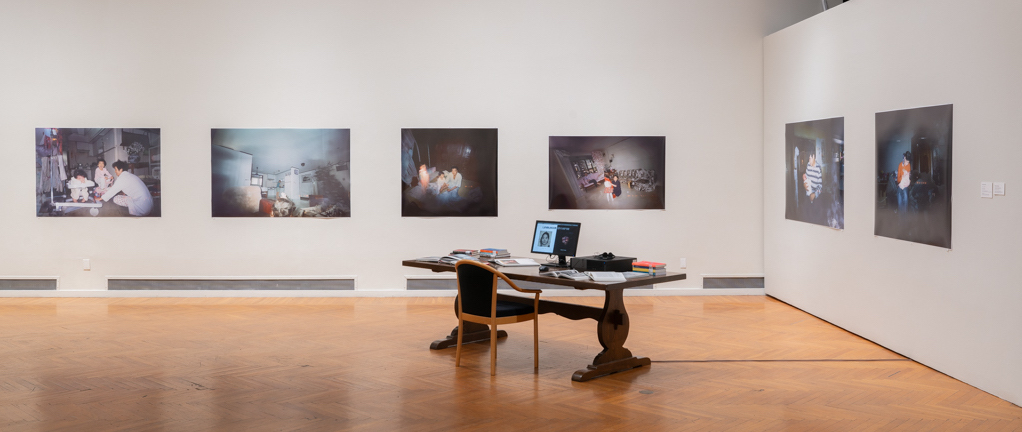
To fabricate new depictions of the women in her family, in Leymusoom Firefly, Il-won-dong 1990-1996, Kwon used an image editing tool powered by Adobe Firefly, a generative AI model, to extend the domestic spaces and figures pictured in these family photos. The results are uncanny reconstructions of the artist’s family home that include artificial figures and objects generated by AI. Through haunting images that appear like dreamscapes, Kwon renders her childhood in a different light and liberates her ancestors and herself from familial and historical trauma rooted in patriarchy.

Ranu Mukherjee mapped imaginary forests and mines to explore territories that are at once mythical and paradoxical, and at the frontlines of survival. Her work considers how experiences of rupture and longing can be catalysts for building new imaginative capacities. Moreover, she shows how the landscapes we create in our imagination connects us with the landscapes we have come from and travelled through.

Her film installation is part of a larger project titled Ensemble for Non-Linear Time, which investigates energy and the paradox of sustainability by looking at rare earth and lithium mining with the help of Bay Area choreographer Hope Mohr and local dancers.
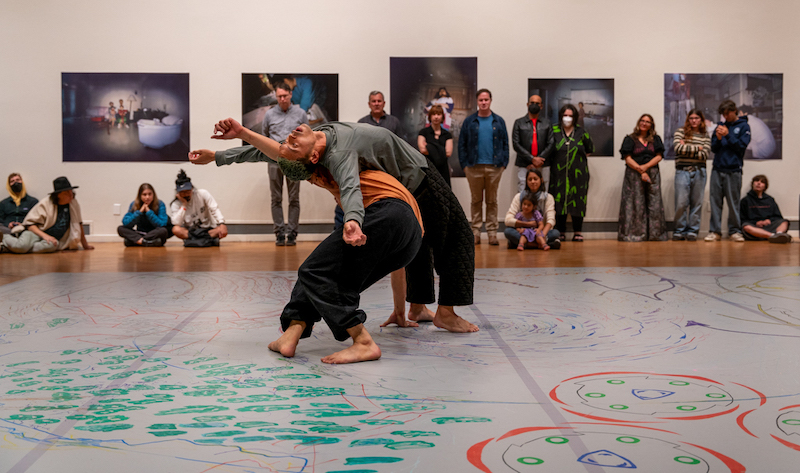
Mukherjee’s large drawing atop a dance floor mapped an imaginary forest and mine to explore territories that have both universal mythical significance and site-specific ecological and cultural significance. Created as an invitation to all visitors to physically explore and perform, This is a map of a mine in a forest/This is a drawing/This is a dance floor/This is a question/This is an invitation, honored the rich history of cross-fertilization between the performing and visual arts at Mills College.
The Mills Institute and Mills College Art Museum Collaborative Fellowship, 2025
As MCAM celebrates its centennial, we look to use our collection and exhibition archives to generate new scholarship. To that end, we are partnering with the Mills Institute on an exciting new fellowship that invites Northeastern faculty and graduate students to embrace experimentation and use the MCAM collection to engage with the Mills Institute’s annual theme and produce an article-length publication or comparable public work.
The Mills Institute was formed in 2022, when Mills College merged with Northeastern University, to honor and advance Mills’ legacy as a historic women’s college. The Mills Institute advances gender and racial justice through programs and partnerships that support transformative teaching and learning, research, and career development. This fellowship is part of a larger initiative aimed at supporting innovative research at The Mills Institute and growing our collaborative relationships with others whose work aligns with our mission.
NOTES